“Montessori” is a word many parents have heard, but what does it actually look like in a classroom? Since 2009, KidAble has blended the Montessori approach with language learning. Here is what it means in practice.
The idea behind Montessori
Dr Maria Montessori observed that children learn best through experience: by touching, moving, trying and repeating. Instead of sitting and listening for long periods, children work with concrete materials, at their own pace, guided by a teacher who observes and encourages.
Five things you will notice in our classes
- A prepared environment: materials are carefully chosen and placed within reach, so children can choose an activity and put it back.
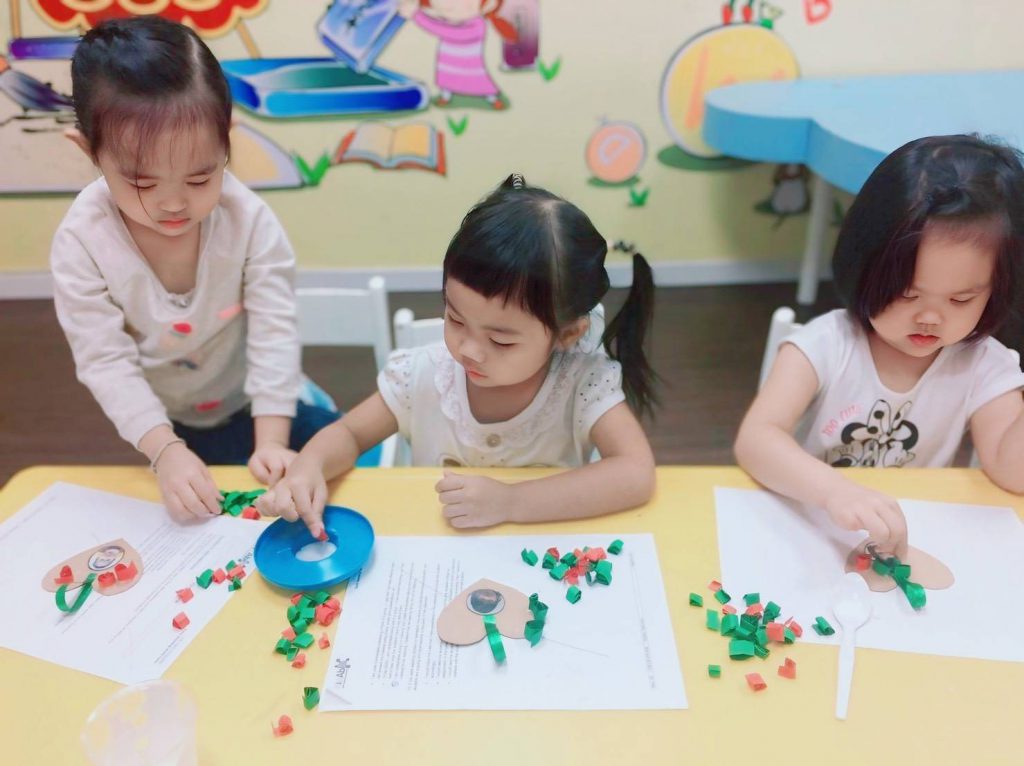
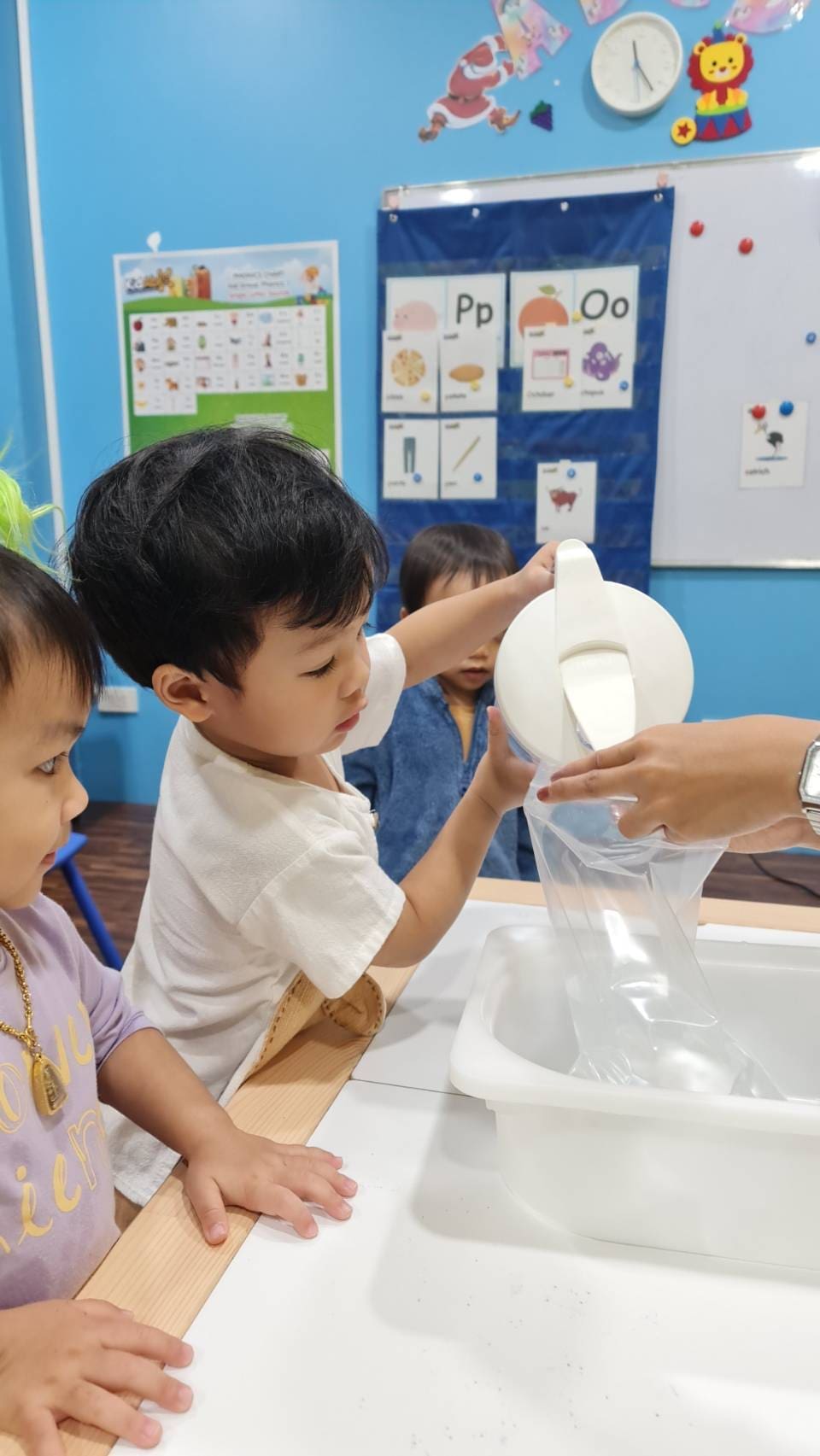
- Work mats and real tasks: pouring water, cutting with child-safe scissors, shaping play dough. These “practical life” activities build concentration and fine motor skills, the same skills children later need to hold a pencil.
- Hands-on materials for abstract ideas: counting boards, number rods and wooden puzzles turn numbers and shapes into something children can hold.
- Independence: children are encouraged to try by themselves first. “Help me to do it myself” is a very Montessori sentence.
- Respect for each child’s pace: some children need more repetition, others want the next challenge. Small groups make that possible.
Why Montessori works so well with languages
Language is learned best when it is attached to real actions. When a child pours water while the teacher says “pour, slowly, stop”, the words have meaning. When they sort red and blue blocks, colours stop being a list to memorise. At KidAble, English and Chinese are woven into these activities, so children learn the language while they do things.
Montessori at every age
- Play Group (1–3 years): sensory play, music and movement with a parent.
- Kid Group (around 3–6 years): practical life, phonics, counting and handicraft.
- Junior Group (6–12 years): collaborative projects, independent thinking and the four language skills.
Bringing Montessori home
- Give your child small real jobs: setting the table, watering plants, sorting socks.
- Keep a few toys within reach and rotate them, rather than many at once.
- Wait a few seconds before helping. Often, children find the solution themselves.
Want to know more? Read about our approach or book a free trial class and see a Montessori-inspired lesson for yourself.