Tablets and phones are part of every family’s day. Rather than fighting them completely, parents can make screen time work for language learning, as long as a few simple rules are in place.
Passive versus active screen time
Watching endless short videos alone is passive: children hear words but rarely use them. Screen time becomes useful when it is active (the child answers, sings, repeats or creates) and shared (an adult talks about what they see together).
What works best
- Slow, simple cartoons in English or Chinese: clear speech, repetition and everyday situations.
- Songs to sing and move to: action songs get children talking and moving.
- Phonics and character apps: short games that practise letter sounds or Chinese characters.
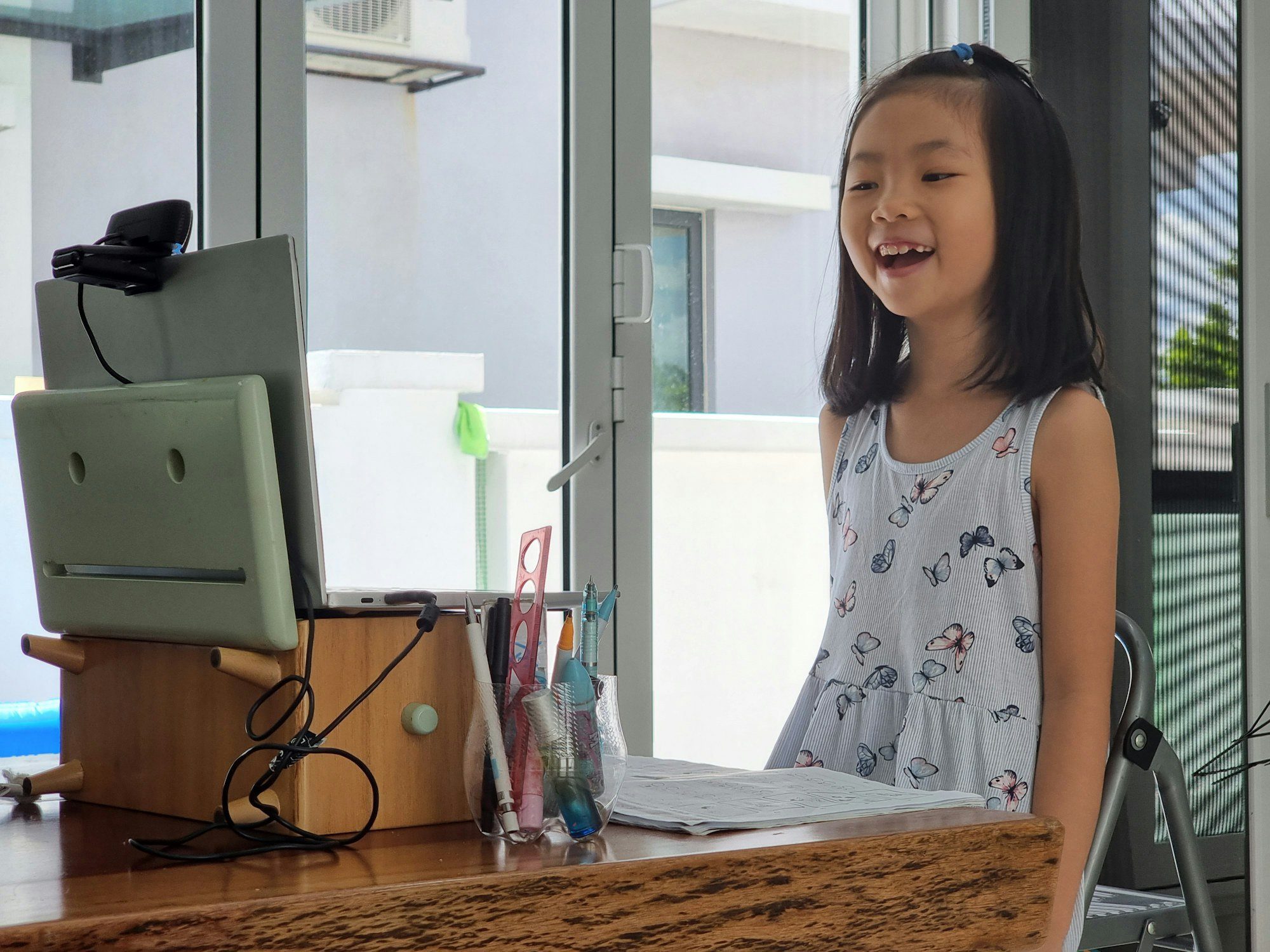
- Video calls: talking with family, friends or a teacher is real communication.
- Live online lessons: a teacher who interacts in real time is very different from a video that plays on its own.
Practical rules for families
- Follow age guidance: health organisations generally advise avoiding screens for babies and keeping it to about an hour a day of good-quality content for young children, with an adult involved.
- Choose before you press play: pick the content together instead of letting autoplay decide.
- Switch the language: many cartoons offer English or Chinese audio; add subtitles in the same language for readers.
- Talk about it afterwards: “What did Peppa do today?” turns watching into speaking.
- Keep screens out of meals and bedtime: those moments are for conversation and books.
Balance is the goal
Screens can support language learning, but they do not replace people. Children learn to speak by speaking with others: parents, teachers and friends. Use screens as a bridge to real conversations, not as a substitute.
Online, but with a real teacher
When distance or schedules make it hard to come to school, our live online classes give children real interaction with qualified teachers in English and Chinese, with regular feedback for parents. Or book a free trial class at one of our schools.